

I’m not good at writing “top ten must-eat” lists. This post is just a few things I actually ate in Korea and can still taste in my memory — mostly meals I had alone, a few with classmates. Some were amazing; some I still can’t accept to this day. That’s it.
Imun Seolnongtang · Jonggak
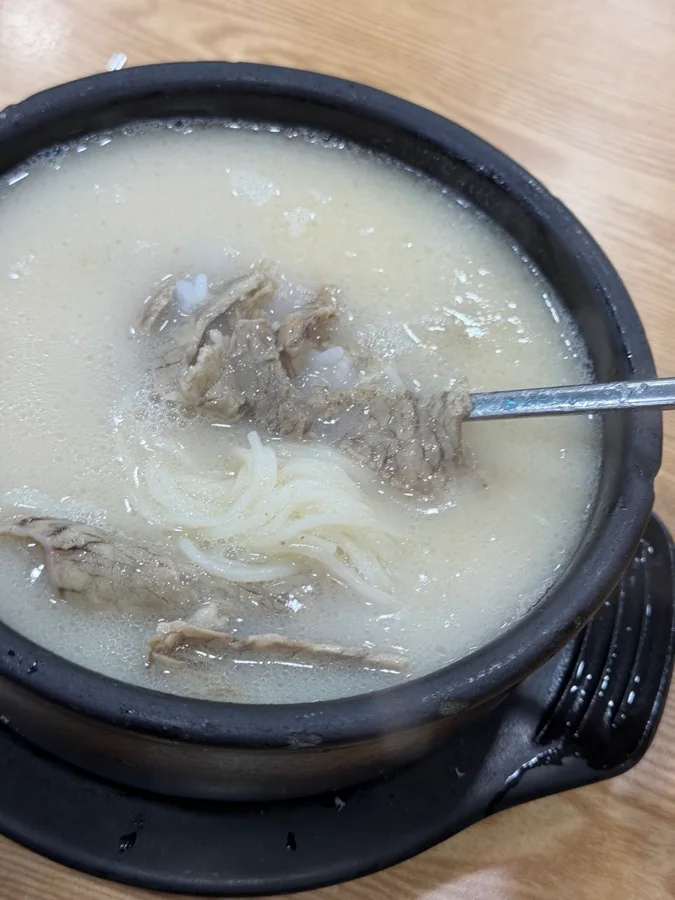
I only learned later that this place is a big deal — Imun Seolnongtang (이문설농탕) opened in 1902 and is considered the oldest surviving restaurant in Korea. For over a hundred years it has made exactly one thing: seolnongtang.
The first time I walked in, the room was full of foreigners. Only after I sat down did I slowly figure something out: everyone was really there for the plate of cabbage kimchi and radish on the table. The soup itself has almost no flavor.
Really, none at all — not the kind of bland that’s hard to drink, but a cleanness that makes you pause. A milky-white bowl with noodles and a few slices of beef; you swallow and catch only the faintest trace of beef aroma, there and gone. Strangely, it isn’t greasy at all. You have to add your own salt, your own scallions, drop in a chopstickful of kimchi — only then does the bowl “begin.”
That day I ate alone in Jonggak. Later I roughly understood: they simply don’t season it at the base level; for over a century they’ve let each guest salt and scallion it to taste. Maybe this flavorlessness is its flavor.
White Whale Hanjeongsik · Jongno
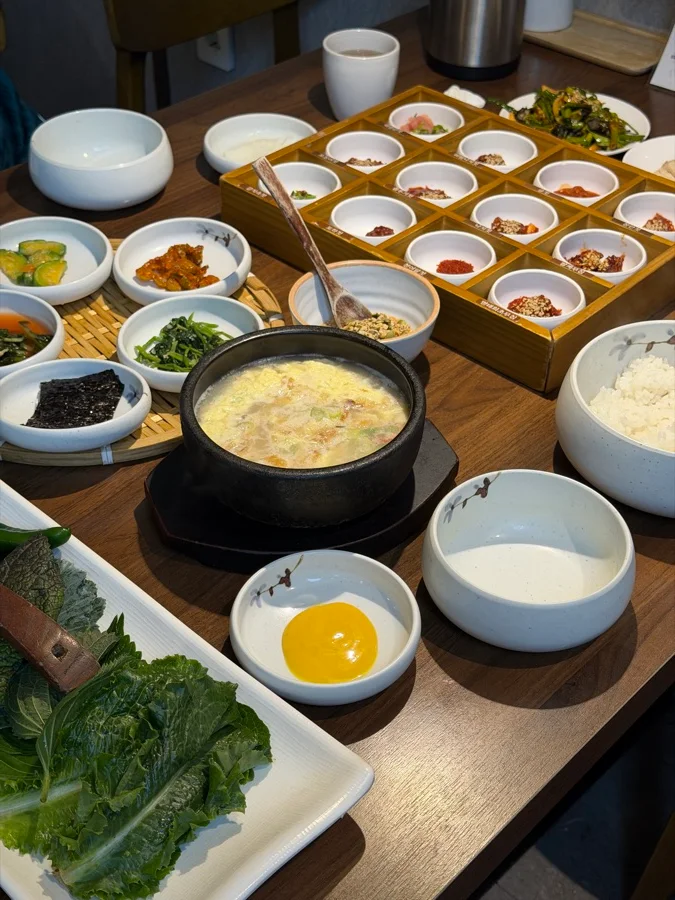
My classmate and I each ordered a set meal and added a roast duck. When it came out it was genuinely spectacular — tray after tray of sauces: salted pollock roe, shrimp sauce, squid sauce, Jeolla shrimp sauce, and every kind of pickle.
The good first: the sauces are truly excellent. The Jeolla shrimp sauce was deeply savory, but my favorite was the little crab sauce — with plain rice it bought me an extra bowl. The pollock soup on the side was also very good.
Then, the wall I can’t get over. The raw vegetables were too bitter, too astringent — I still can’t get used to them. And the squid sauce and salted roe were too “Korean”: that fully-fermented salty depth was almost more than even I could handle. The squid sauce especially — I took one bite and never touched it again.
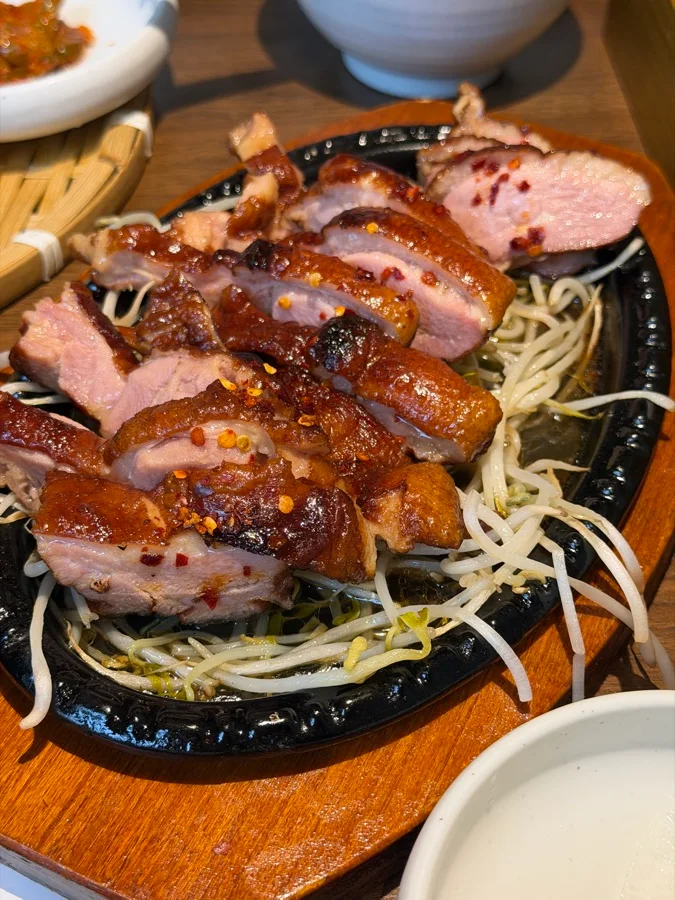
The roast duck saved the meal instead — aged, then smoked, then roasted, the fat under the skin rendered out completely clean. It was the easiest thing to eat that whole meal.
Monkfish · My Classmate Treated
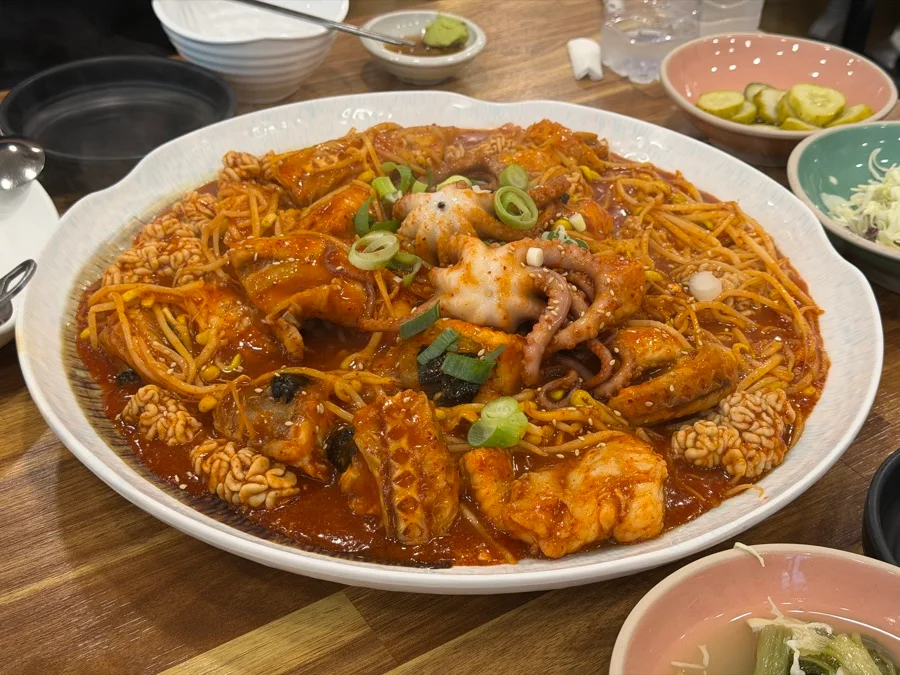
Back home I almost never get to eat monkfish; this meal was my classmate’s treat. A huge plate arrived glowing red — bean sprouts on the bottom, monkfish and octopus wrapped in a thick chili sauce, a generous portion.
What made this dish stick in my memory wasn’t the chili sauce, but the monkfish milt — a soft, melting savoriness in the mouth that formed a strange balance with the plate’s intense heat. If my classmate hadn’t ordered it, I never would have thought to.
Jokbal (족발)
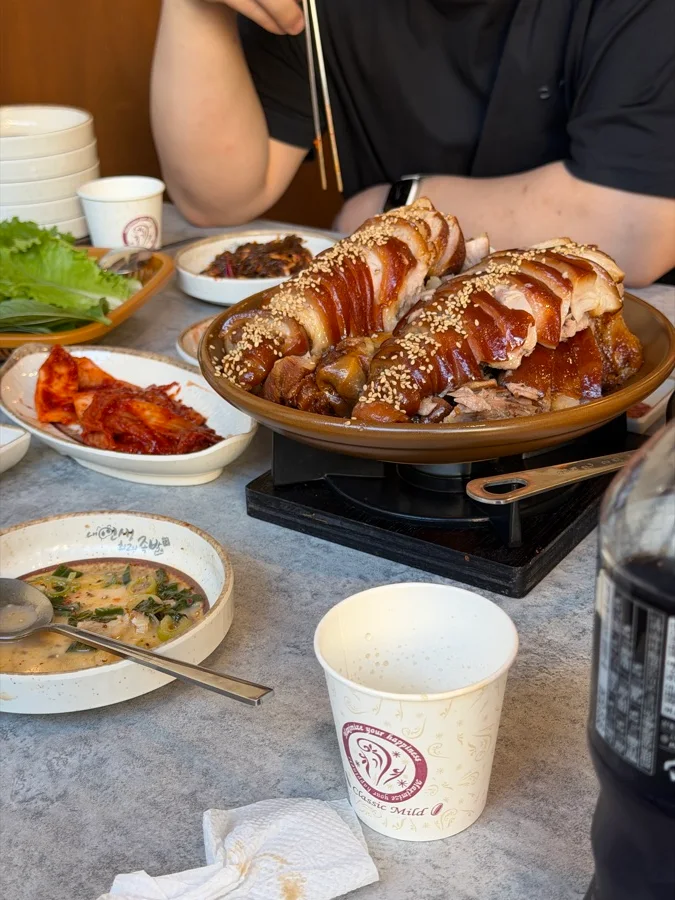
Korean jokbal and Chinese pig’s trotters are completely different things.
Sliced and plated, sprinkled with white sesame. The meat is braised until it’s falling apart, almost melting in your mouth — and the key thing: there’s no funk at all. Not like some trotters I remember, the kind with a smell you have to “push through.” This is clean; you can eat slice after slice straight. Wrapped in lettuce with sauce, you can demolish a whole plate in one sitting.
Hanwoo Offal Soup · The Couple’s Shop Near School
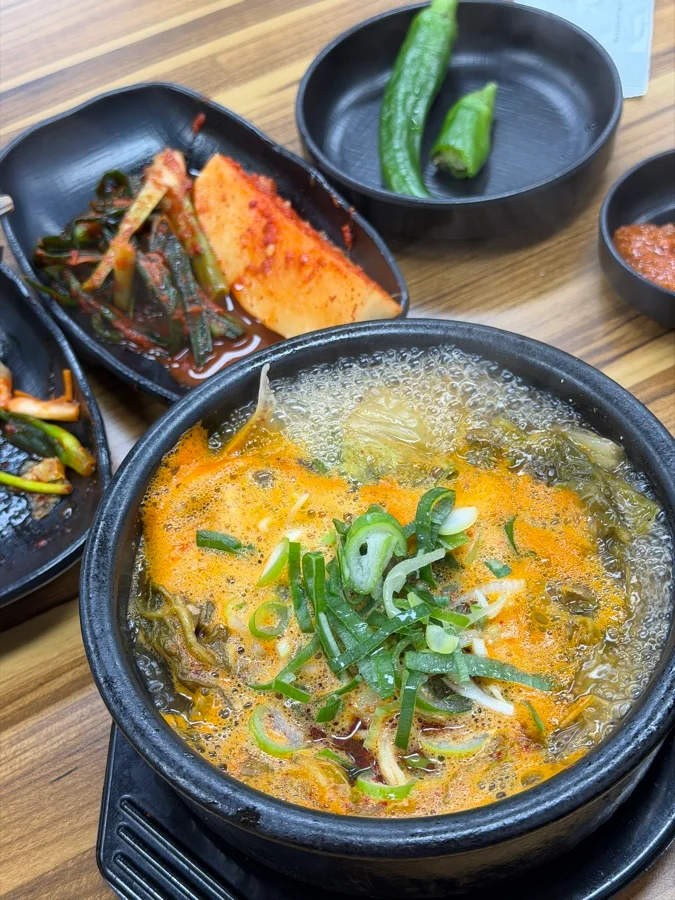
This was the place I went to most in Korea — a little shop run by a couple with their son, right near school.
Honesty first: the offal soup is gamey, a strong hit of beef funk. I took classmates once; they couldn’t handle it. But for some reason, only I kept going, every single week.
What really hooked me was their chili oil — incredibly fragrant. Once, I wanted to ask their son for another serving of chili oil, and I managed to squeeze out the words “gochu oil.” He looked completely lost. We gestured back and forth for ages before it finally clicked. From then on, every time I walked in, he’d bring the jar of chili oil over first — no words needed.
Their kimchi is special too: pickled with apple, almost no salt, the flavor clean and light with a hint of fruit — nothing like the brutally salty stuff outside.
What keeps you at some shops is never the signature dish. It’s the jar of chili oil that arrives before you ask.
Clear Beef Rib Soup · Another Shop
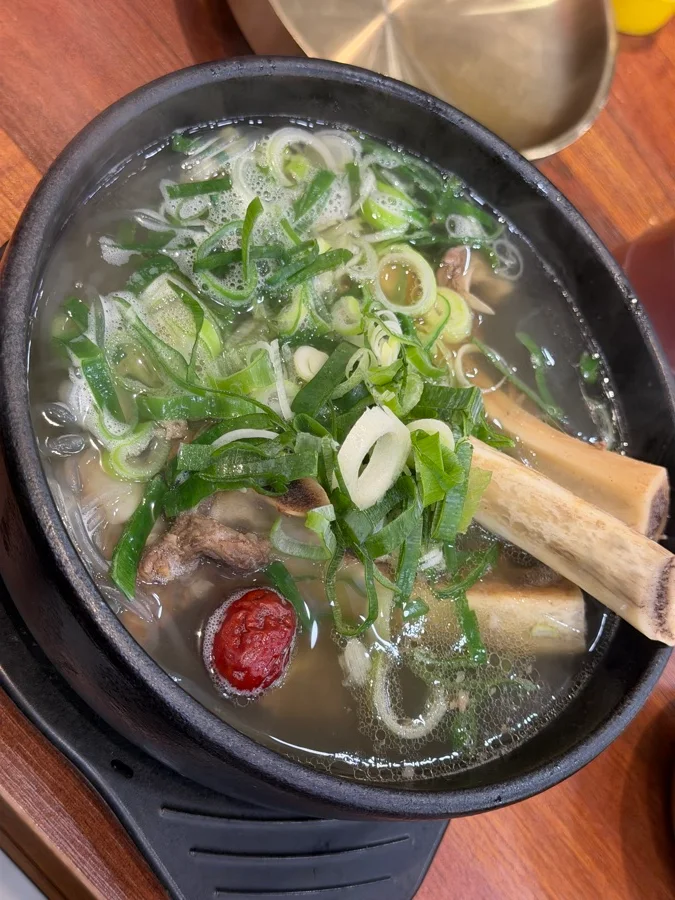
This is a clear beef rib soup from a different shop — not the same thing as the offal soup above.
The interesting part is that it goes in the complete opposite direction: no gaminess, no punch, just clean and clear. The pot holds nothing but scallions and beef; the broth looks watery and unremarkable — yet I couldn’t stop, spoonful after spoonful until I hit the bottom of the bowl.
The offal soup held me with sheer “force”; this clear soup held me with “cleanliness.” Same cow, two extremes. I love them both.
Stir-Fried Pork and Squid · Yeouido
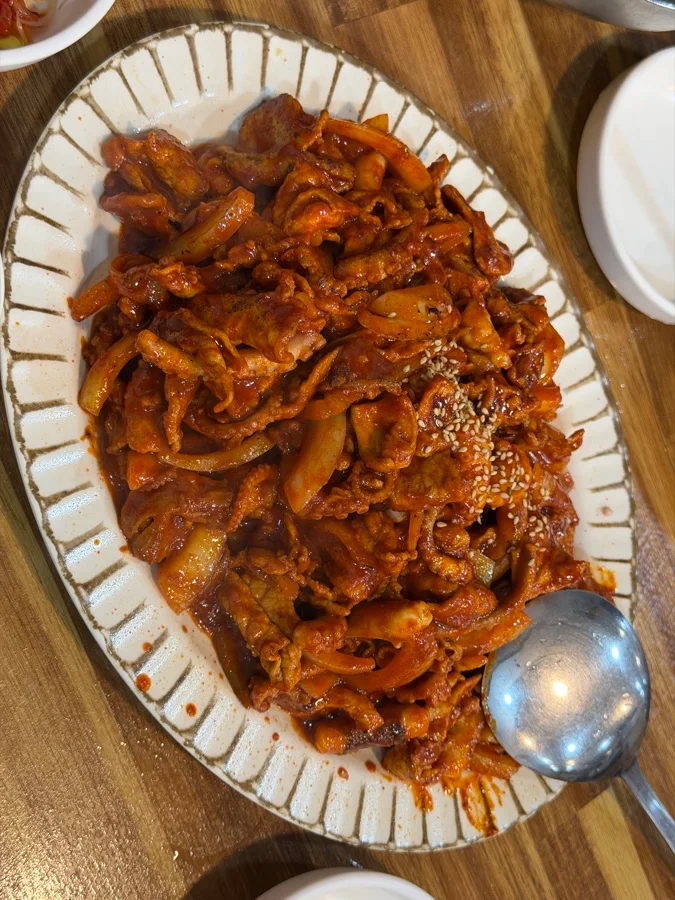
A very famous place in Yeouido, hidden on the basement level — completely packed when we went.
Stir-fried over a roaring fire, pork and squid coated in a thick red sauce, full of wok hei. Honestly, this dish felt to me a lot like “Korean-style Chinese food” — that breath of the wok, that rice-demanding intensity, connects with the Chinese stir-fries I know. Eating that flavor alone in a basement in a foreign country makes you a little dazed.
Sotbap / Scorched-Rice Soup
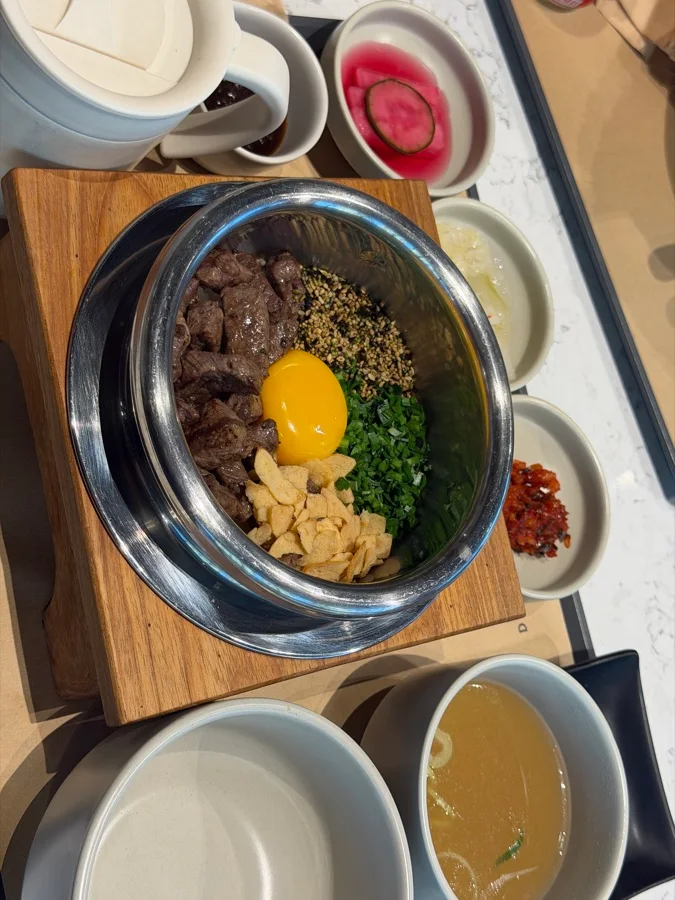
At first I was deeply skeptical of scorched-rice soup. After the rice is scooped out of the stone pot, you pour hot water over the crust left behind and steep it into a soup — how could that possibly be good?
One try and I was converted. It’s the plainest rice fragrance, plus a little meat and scallion — nothing competes with anything. And at the end, that bit of faintly toasted crust at the bottom of the bowl became the part of the meal I most looked forward to. Some deliciousness is built from complexity; this isn’t. It’s the clean, reassuring kind of good.
Last Words
During my time in Korea, I wrote it all down — the delicious, the bad, the ones I couldn’t get past. A few things I may never accept in my life (that one bite of squid sauce), and a few became weekly rituals I never skip (that gamy-but-gamy offal soup).
Food is pretty honest. It won’t suddenly suit your taste just because you’re abroad, just because you want to fit in. What stays is what truly suits you — or a shop where someone remembers you want the chili oil.