
Results first.
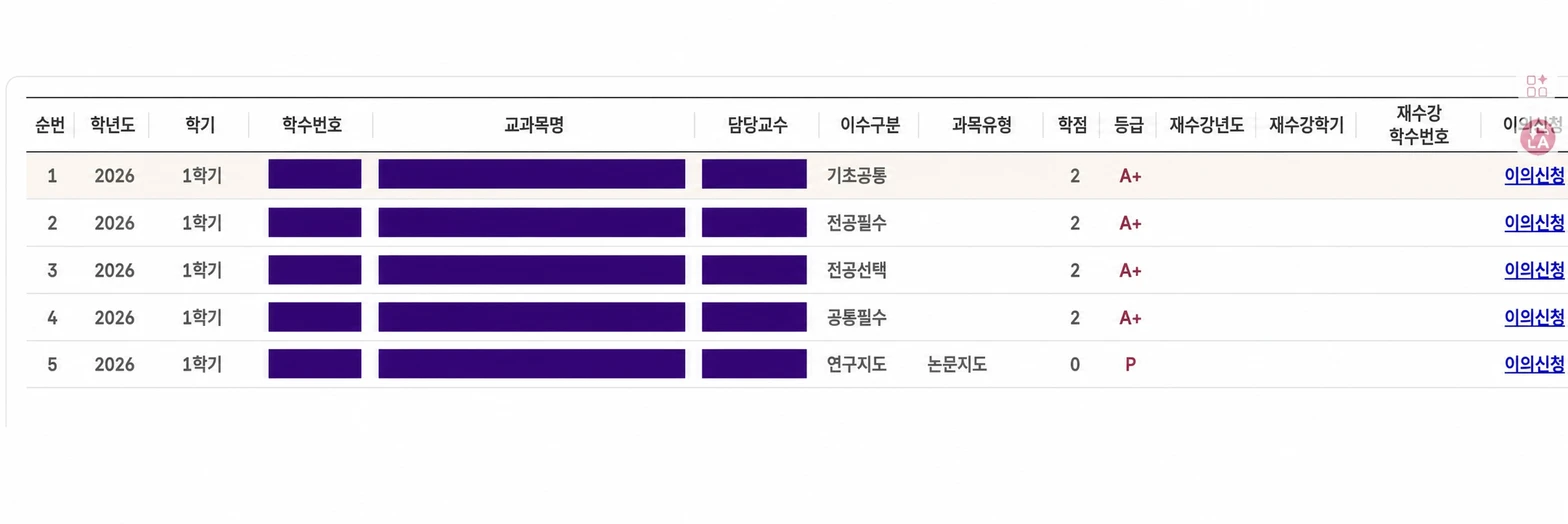
In the first semester of 2026, I got A+ in all four graded courses, plus a P in one research supervision course.
Some background: I'm a Chinese student doing grad school in Korea. Two of my courses this semester were taught in a foreign language—at the start, I couldn't catch a single word the professor said at the podium. No language talent, no year of language school beforehand, no inspirational "total immersion breakthrough" story.
I just hired myself a research team. Full-time, on call 24 hours, covering simultaneous interpretation, research methods, literature reading, and academic writing.
Starting price: $20 a month.
My Lecturer Is a Chinese Interpreter with an Indian Accent
Let's start with the most surreal one: the courses taught in a foreign language.
Last semester my setup was speech-to-text—the professor speaks Korean, Chinese subtitles scroll across the screen. It sounds usable; in practice it was a disaster. Your eyes get taken hostage by the subtitles. Look down to read them and you miss the blackboard and the PPT; look up at the blackboard and three lines of subtitles have already scrolled by. By the end of one class, I'd effectively taken "reading comprehension" and "the actual course" at the same time—my cognitive load doubled, and I was more exhausted after class than after a five-kilometer run.
This June, Google released Gemini 3.5 Live Translate. It differs from previous translation products in a fundamental way: it's not a three-stage relay of "transcribe → translate → synthesize," but a single audio model that takes speech in and puts speech out, streaming continuously without waiting for the speaker to pause. Every stage of the old pipeline added latency, so every product eventually stalled at "subtitles." The architecture changed, and only then did the experience change qualitatively.
My current class setup: a MacBook on the desk, a Sony microphone plugged in to capture the professor's voice, earbuds in my ears.
What comes through the earbuds is a Chinese simultaneous interpreter with an Indian accent, teaching the class on behalf of the Korean professor.
Latency? Nearly real-time. The moment the professor finishes a sentence, the Chinese is already in my ears. My eyes are completely free—the blackboard, the PPT, the professor's expressions. It's like taking a class in my native language.
Accent correction is not included in a $20-a-month service. But honestly, after a semester of listening, I've grown quite fond of this "Indian teacher."
The Methods Course: A Mentor Who Only Asks Questions and Never Gives Answers
This semester I had a research methods course, and the final deliverable was a complete research proposal—topic, hypotheses, research design, data plan, the whole pipeline. For a new student, this is the assignment where things most easily go wrong: anyone can read a methods book, but no book will tell you "which method should my topic use."
I cast AI in three roles:
First, a red-ocean detector. Once you have a direction in mind, don't fall in love with it just yet. I'd throw the topic to AI to scan the literature: has anyone done this? How far did they get? Where has it become a red ocean, and where are the gaps? Once it told me outright: the core idea you want to pursue has already been published—and published well—but approaching the same question from a different angle is something the existing literature explicitly points to yet nobody has done. The topic instantly flipped from "duplicated labor" to "taking one more step down the path my predecessors paved." This kind of search-plus-judgment used to be the privilege of advisors and senior classmates; now it's my daily routine.
Second, a Socratic sparring partner. This is the usage I recommend most, and the most counterintuitive one: explicitly instruct the AI not to give you answers directly. Have it only ask questions, only challenge, only point out holes in my reasoning. Some of the hardest decisions in the research design—like how to handle a nuisance confounding factor—were things I figured out myself only after it pressed me step by step: that "trouble to be eliminated," viewed from another angle, could become a variable in the research design. The thrill of that moment is a completely different thing from copying a ready-made answer.
Third, a hypothesis polisher. My research had an awkward feature: theoretically, the results could plausibly go in either direction. My first reaction was "that's a flaw—hide it." After going back and forth with the AI, the writing flipped completely—the two directions became a pair of competing hypotheses, plus a test designed to adjudicate between them. Directional uncertainty isn't a weakness; it's a selling point. This kind of "art of war for academic writing" is something nobody teaches in class.
Note the verbs I'm using: detect, press, simulate. Every word of this proposal was written by me; every decision was made by me. AI didn't do grad school for me—it just lowered the price of "repeatedly discussing with someone knowledgeable" from "knowing a professor willing to spend the time" to $20.
The New Student's Hidden Cheat Code: Academic Etiquette
There's something nobody tells you about that quietly docks points from you every day: academic etiquette.
Writing my first email to a professor, I stared at a blank screen for half an hour: how formal should the honorifics be? Do I open with pleasantries? Which paragraph should my question go in? If I want to request a meeting, how do I phrase it without being presumptuous?
This one lesson from AI was worth a year's tuition: Lead with the conclusion—professors get dozens of emails a day and have no time to guess what you want, so put your judgment and your request in the first paragraph. Pass the ball clearly—are you asking the professor to make a decision, or just reporting? Every email should end with one clear question the professor can answer directly. Leave an exit—when requesting a meeting, write "if that's convenient for you; I'm also happy to meet at another time," leaving the decision in their hands.
Local students absorb these things from their seniors; international students can only learn by walking into walls. Now the cost of walking into walls has dropped to zero.
This Team Lies, So You Have to Be the PI
By now you might think I'm cheerleading blindly. Let's look at the crash site.
While preparing course materials, I asked an AI coding tool to prepare references. What it handed in had perfect formatting, plausible-sounding author credentials, and journal names that were all real—but several of the papers simply didn't exist. A textbook AI hallucination: making things up with a straight face. If I'd submitted it as-is, it would have been an academic incident.
My solution is having multiple agents check on each other: key factual material produced by one AI gets thrown to another AI from a different vendor for verification, plus spot-checks of the original sources. It sounds tedious, but it's just the most basic cross-review inside a research team—except my "team members" are a few models that don't trust each other.
That's the difference between a $20 tutor and a $20 research team: you can trust a tutor blindly, but a team you must manage. AI isn't one teacher; it's a group of research assistants with superhuman ability who occasionally talk nonsense—and you must be the PI. The responsibility for verification is always yours. That's not a defect of AI; that's literally the job description of being a PI.
While You're Still Debating Whether to Use It, the World Has Already Changed
I know some teachers reading this are already getting angry: "Isn't this just cheating?"
Then let's look at what the top schools are doing.
Anthropic (the company behind Claude) launched Claude for Education, and universities like Northeastern, LSE, and Dartmouth have signed campus-wide access agreements—not quietly tolerating students using it in secret, but the school paying to enable it for every student. As of mid-year, the officially confirmed partner institutions numbered nine. They even built a dedicated Learning mode: it guides students' reasoning process instead of giving answers directly—the same idea as my "questions only, no answers" usage from section two, except they turned it into a product. Claude is also integrated directly into the Canvas course system, so students can invoke AI right from the course page.
On one side, top institutions are embracing AI institutionally, researching "how to use AI to make students think more, not less." On the other side, many schools still treat AI as a flood beast—professors announce in class that "any detected AI use means an automatic zero," and students use it furtively in their dorms, and precisely because it's furtive, they only learn the most degenerate usage: copying answers outright.
The ban didn't eliminate AI. It only eliminated the education of "how to use AI correctly."
Let's Do the Math
Finally, back to that $20 in the title.
Honestly, my total monthly spend on AI is around $60—several subscriptions combined. $20 is the entry ticket; $60 is my full configuration.
But the point of this math was never "how much money I saved." If you try to compute "how much tutoring/translation did AI replace," you'll find it doesn't compute—because the service package I bought could not have been bought at any price on Earth two years ago.
Don't believe me? Try assembling it yourself: a simultaneous interpreter sitting in every one of your classrooms, plus a methodology mentor who's online 24 hours and gets more patient the more you ask, plus a reading assistant who can go through millions of words of literature with you, plus a senior classmate who knows the unwritten rules of academia. That combination wasn't expensive before—it didn't exist. A semester of language school costs millions of won and still can't buy real-time interpretation in class; no matter how well you know a professor, you can't ask them to discuss research design at 2 a.m.
For $60 a month, what you get is a species that didn't previously exist. That's the real dividend this era pays to students.
A Final Statement of Boundaries
This is also the bottom line of this essay: every assignment, report, and exam this semester—the output is mine, the conclusions are mine, the responsibility is mine. AI helps me understand; it doesn't think for me. It translates the classroom for me; it doesn't attend class for me. It verifies the literature for me; it doesn't write my papers.
Straight A+ wasn't earned by AI. It was earned by a student who could finally understand the lectures, afford to ask questions, and afford to make mistakes.
The tools have been in place for a long time. What was always missing was the usage.